The Colorado Division of Real Estate's practice advisory describes the contract language this way: "The seller of residential real property is required to provide the buyer with any known information on radon test results." That single sentence, printed in bold on every Colorado sales contract since August 2023, sounds like a safety guarantee. It isn't one. It's a disclosure of knowledge, not a requirement to acquire any. A seller who has never tested their Longmont home can check the radon box "unknown" and be in full legal compliance, even though the soil under that house has never once cared whether anyone looked.
That distinction matters in Longmont, where local test data show that radon levels exceed the EPA action level in a substantial share of tests.
What the law actually asks a seller to do
Colorado's Senate Bill 23-206 changed how radon shows up in a real estate transaction, but it changed less than the bold warning text implies. The statute requires every residential sales contract to carry a specific advisory: that the Colorado Department of Public Health and Environment recommends indoor radon testing before purchase, and recommends mitigation if elevated concentrations turn up. It also requires the seller to hand over any test results, reports, or mitigation records already in their possession, along with a copy of the state's official radon brochure.
None of that requires the seller to test. The Colorado Division of Real Estate's practice advisory on the bill is explicit that the obligation is to disclose known information, and the text of SB23-206 itself never uses the word "test" as a seller obligation, only as a buyer recommendation. A seller who has lived in a house for fifteen years without ever running a kit has, legally speaking, nothing to disclose. The box gets checked "no known information" and the transaction moves forward exactly as if the home had tested clean.
What "unknown" is actually hiding
That gap between disclosed and unknown is where Longmont buyers lose the thread. An empty disclosure line reads like an empty inspection report: no news, good news. But radon isn't the kind of hazard a homeowner would notice on their own. It has no smell, no color, and no symptom that shows up before a diagnosis. A seller's honest "unknown" carries the same information value as no answer at all.
The state's own guidance underscores this. The CDPHE's radon and real estate page frames testing as something buyers are "encouraged" to initiate during their own inspection period, not something the transaction structurally requires from either side. In a market where a large share of homes have never been tested even once, that framing puts the entire burden of discovery on the buyer's 48-hour window.
What Longmont's own numbers say
Boulder County sits in EPA Radon Zone 1, the agency's highest risk classification, alongside a shrinking handful of counties nationwide where indoor screening levels are predicted to average above 4 picocuries per liter. That much is true of most of the Front Range and gets repeated on every radon contractor's website in the state. The more specific number is the one that applies to Longmont's own zip code.
Using a CDPHE dataset spanning 2005 through 2025, a review of pre-mitigation radon tests found that 43.5 percent of the 19,914 tests recorded in the 80501 zip code came back at or above the EPA's 4.0 pCi/L action level. That's a large enough sample, nearly 20,000 individual tests over two decades, to treat as a real pattern rather than a marketing claim. Statewide, the comparable pre-mitigation figure sits at 46.4 percent. Longmont's number is close to, but below, the statewide figure.
| What's measured | Figure | Source period |
|---|---|---|
| Colorado homes above EPA action level (statewide, CDPHE estimate) | About half | Ongoing state estimate |
| Pre-mitigation tests statewide at or above 4.0 pCi/L | 46.4% | CDPHE dataset, 2005-2025 |
| Pre-mitigation tests in Longmont's 80501 at or above 4.0 pCi/L | 43.5% of 19,914 tests | CDPHE dataset, 2005-2025 |
That table is the actual argument here. Roughly two out of every five radon tests run in Longmont's largest zip code have come back at or above the level the EPA says warrants action. A seller who never tested isn't disclosing a clean home. They're disclosing that the coin was never flipped.
Why the age or price of the house doesn't change the odds
Radon forms when uranium in bedrock decays, and Front Range soils sit on decomposed granite that's rich in exactly that mineral. The gas moves upward through whatever gaps a foundation offers: cracks, sump pits, crawl space dirt, construction joints. That mechanism doesn't check a listing price or a construction date. A 2024 build with a poured basement and a 1978 ranch with a crawl space are both sitting on the same geology, and the EPA's own radon zone data treats the whole county as one risk profile regardless of what's built on top of it. A newer home with a passive radon rough-in during construction is better positioned to mitigate cheaply, but that's a different question from whether it needs to.
The window most buyers waste
The inspection period is a key window for a radon test. The state's guidance calls for a continuous radon monitor left in place for a minimum of 48 hours, following at least 12 hours of closed-building conditions before the device goes in. Order it the day the inspection period opens.
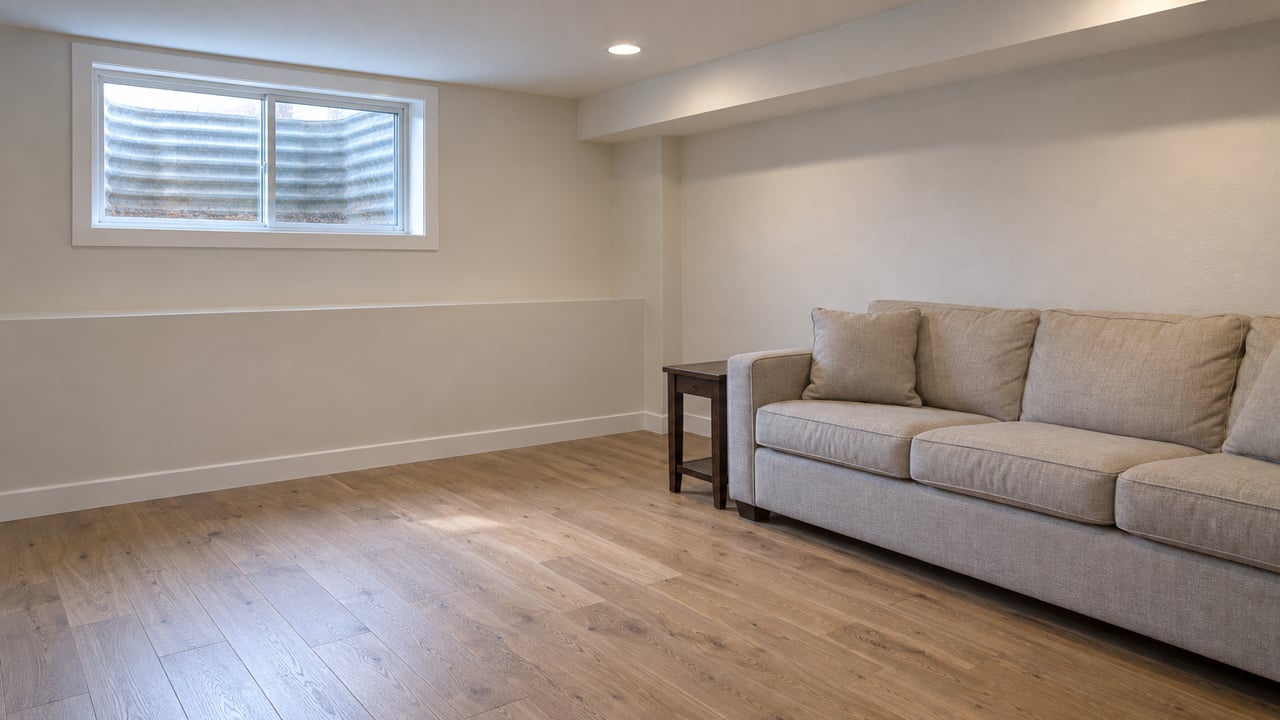
One detail specific to transactions gets missed even by buyers who know to test at all. For personal use, the CDPHE recommends placing the device in the lowest level someone currently occupies. For a real estate transaction, the recommendation shifts to the lowest level that could be converted into living space, which usually means an unfinished basement gets tested even if nobody plans to finish it right away. Skipping that room because it's unfinished is the single most common way a Longmont radon test understates what a buyer is actually walking into.
Local test kits are also easier to reach than most buyers realize. The Colorado State University Cooperative Extension office at 9595 Nelson Road in Longmont carries short-term kits directly, alongside a handful of other county-listed locations, according to Boulder County's own radon testing page.
What a positive result is actually worth
When a test comes back elevated, mitigation becomes a negotiated item exactly like a bad roof or a failing water heater, resolved inside the same inspection objection process as everything else the report turns up. Costs for a standard sub-slab depressurization system in a home with a straightforward basement tend to land in the $1,000 to $2,000 range, with complex foundations, crawl spaces, or unusually high readings pushing the total toward $3,000 or more. The test itself, run as an add-on during inspection, typically costs $125 to $250.
None of that has to blow up a closing timeline. North Point Radon, a mitigation contractor serving Longmont and the surrounding county, has described installing a sub-slab depressurization system in an unfinished Longmont basement on a compressed schedule specifically to keep a time-sensitive sale on track, sealing foundation gaps and venting the collected soil gas above the roofline. A high reading two weeks before closing is a solvable problem, not a dead deal, as long as the test happened early enough to leave room for the fix.
The law keeps moving
Radon disclosure in Colorado isn't a settled subject. The signed text of SB 23-206 provides that, as of January 1, 2026, the tenant's remedy for a landlord's failure to disclose or mitigate no longer applies to leases of one year or less. That's a narrow change on the rental side, but it signals a legislature still actively adjusting how radon gets handled in Colorado housing, on a timeline measured in single years rather than decades. Longmont's own city radon page is a reasonable place to track anything that shifts next.
FAQ
Does Colorado require a radon test before a home can be sold? No. State law requires the contract to carry a disclosure statement and requires sellers to share any test results they already have. It does not require testing to occur.
Who pays for mitigation if a Longmont test comes back high? It gets handled as a negotiated item during the inspection objection period, the same way any other repair request would be.
How long does a radon test take during a home purchase? A minimum of 48 hours using a continuous radon monitor, following about 12 hours of closed-building conditions beforehand. For a transaction, it should go in the lowest level that could become living space, not just the lowest level currently in use.
Radon is one line on a much longer disclosure form, and it's easy to let a blank box read as good news. If you're getting ready to buy or sell in Longmont and want a clear read on what your specific inspection period should actually cover, Smart Moves with Michelle can walk through it with you before the clock starts running.
This article is general information, not legal, tax or financial advice. Consult a qualified professional about your situation.